
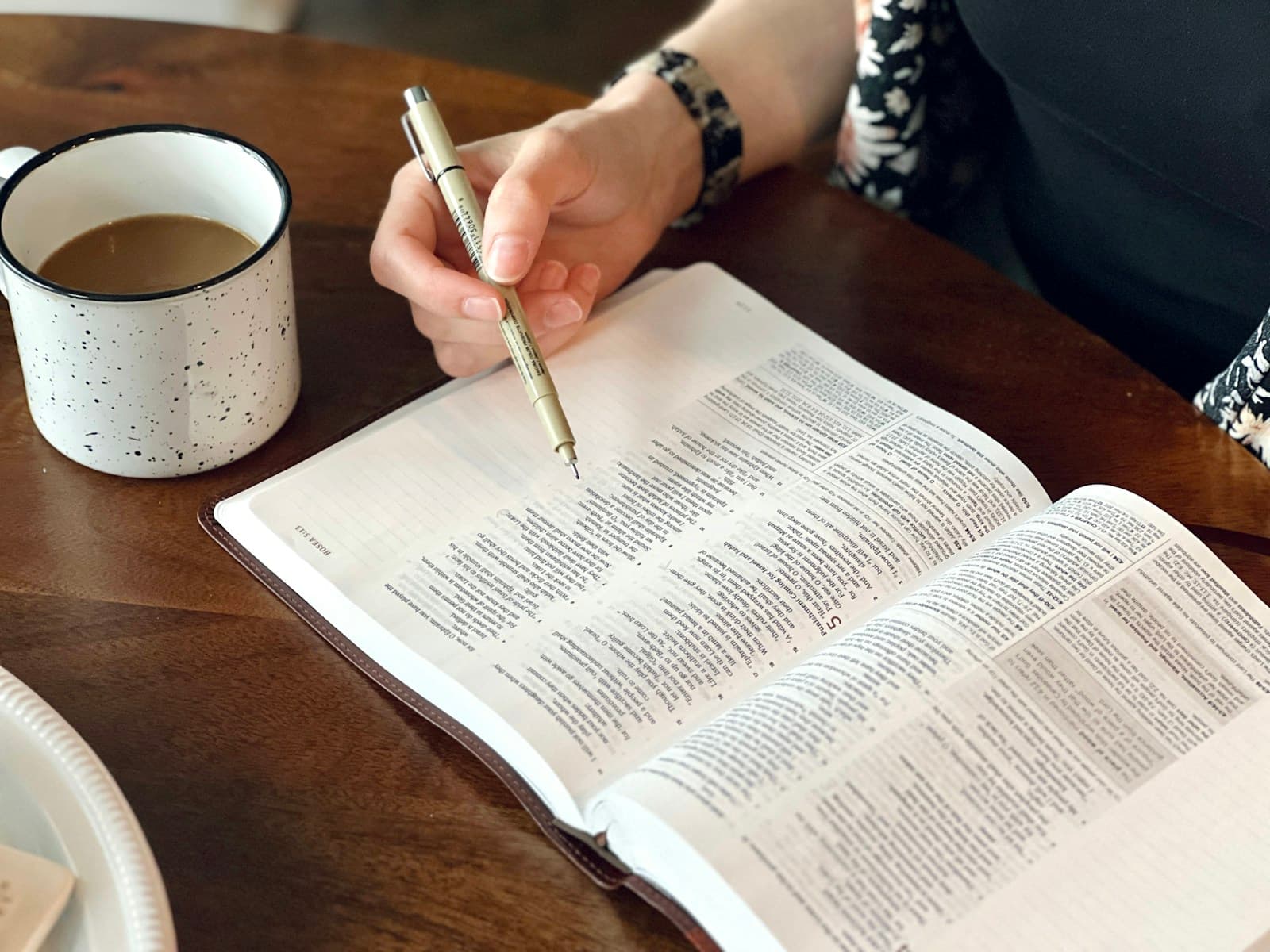
What questions should you ask?
- Who is speaking or writing, and what does the text tell us about them?
- Who is addressed: an individual, a church, a nation or another audience?
- What situation is described?
- What comes immediately before and after the verse?
- Is this poetry, narrative, a letter, wisdom, law or a vision?
Read a whole paragraph first. Our Bible book guides offer an introduction, but use the biblical text and compare reliable commentaries when a question remains open.
What does this change about Philippians 4:13?
I can do all things through Christ who strengthens me.
The previous sentences describe contentment in both need and plenty.
11Not that I speak in regard to need, for I have learned in whatever state I am, to be content:
12I know how to be abased, and I know how to abound. Everywhere and in all things I have learned both to be full and to be hungry, both to abound and to suffer need.
Within Philippians 4:10-20, Paul thanks the Philippians for their support and describes strength through changing circumstances. The passage does not promise success in every goal a reader chooses. That distinction matters when you pray from it.
What about “two or three” in Matthew 18?
For where two or three are gathered together in My name, I am there in the midst of them.”
Read Matthew 18:15-20. The surrounding passage concerns wrongdoing, witnesses, the church and agreement in prayer. Christians differ over aspects of its application, but the immediate context is broader than reassurance about the size of a meeting. Reading the whole passage helps you consider those connections.
Does context make Scripture less relevant?
For whatever things were written before were written for our learning, that we through the patience and comfort of the Scriptures might have hope.
In Romans 15:1-7, Paul connects earlier Scripture with endurance, encouragement and life together. Careful reading can deepen the encouragement without turning every statement into an individual guarantee.
How can you practise today?
Pick a familiar verse. Read its chapter, answer the five questions as far as the text allows, and write one sentence explaining the passage's main point. Then write a prayer that responds to that point. Leave unresolved questions open for further reading.
Living Sword provides Bible reading and referenced AI answers to help you explore. AI answers can be mistaken, so check the passage yourself. See how to pray Scripture for a practical next step.