
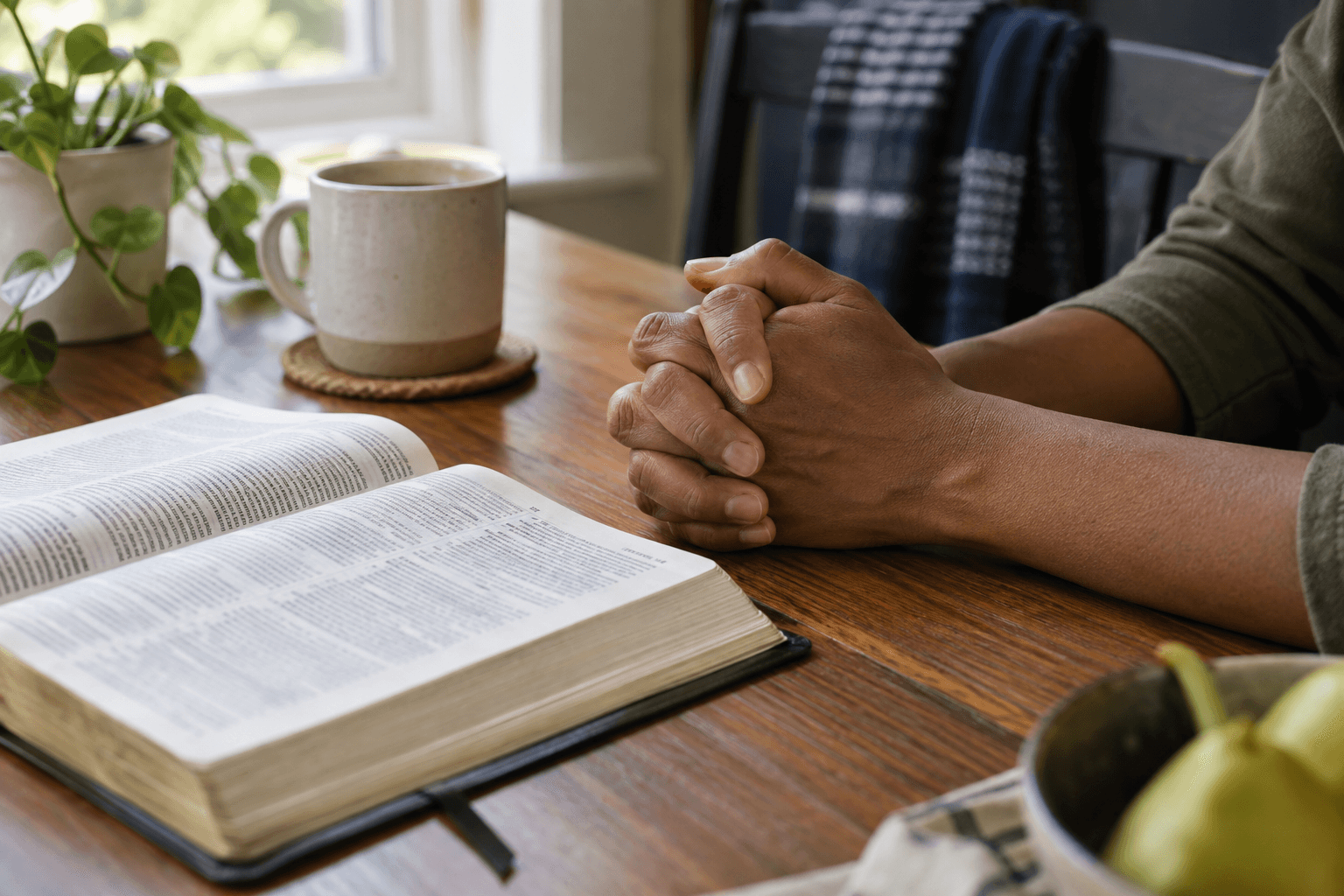
Where do you begin?
Choose a short passage such as Psalm 23. Read the whole psalm before focusing on one verse. Notice its movement from the shepherd's care to the dark valley and the welcome of a host. Trust does not mean the writer never faces trouble.
The LORD is my shepherd; I shall not want.
You might respond: “Lord, help me trust your care today. I am worried about what comes next. Give me wisdom to do what I can, and help me ask for support where I need it.” This is an example of a personal prayer, not a translation of the verse or a guarantee of a particular outcome.
What are the steps?
- Read a short passage and the verses around it.
- Notice who is speaking, who is addressed and what kind of writing it is.
- Name one thing the passage leads you to thank God for or ask about.
- Respond in an honest sentence or two.
- Pause. You can return to the passage later without finishing a long session now.
Does the Bible contain examples?
The prayer in Acts 4:23-31 draws on Psalm 2 before asking for boldness. Daniel 9:1-3 describes Daniel responding to his reading of Jeremiah with prayer. These examples show Scripture shaping a response to God.
How do you avoid taking a promise out of context?
Ask who first received it. Jeremiah's letter speaks to exiles in Babylon and names a long period before their return.
10For thus says the LORD: After seventy years are completed at Babylon, I will visit you and perform My good word toward you, and cause you to return to this place.
11For I know the thoughts that I think toward you, says the LORD, thoughts of peace and not of evil, to give you a future and a hope.
The passage can encourage trust in God's faithfulness. It should not be turned into a promise that your next application, investment or relationship will succeed. Read Jeremiah 29 and our lesson on reading in context.
Which passages could you try next?
- Psalm 13, for honest lament.
- Psalm 51, for confession.
- Philippians 1:9-11, for praying for others.
- Matthew 6:9-13, the prayer Jesus teaches.
Living Sword can help you begin with your own concern and a prayer that includes Scripture references. Read those references in context and make the words your own. Write your first prayer with a free account and no payment card.